
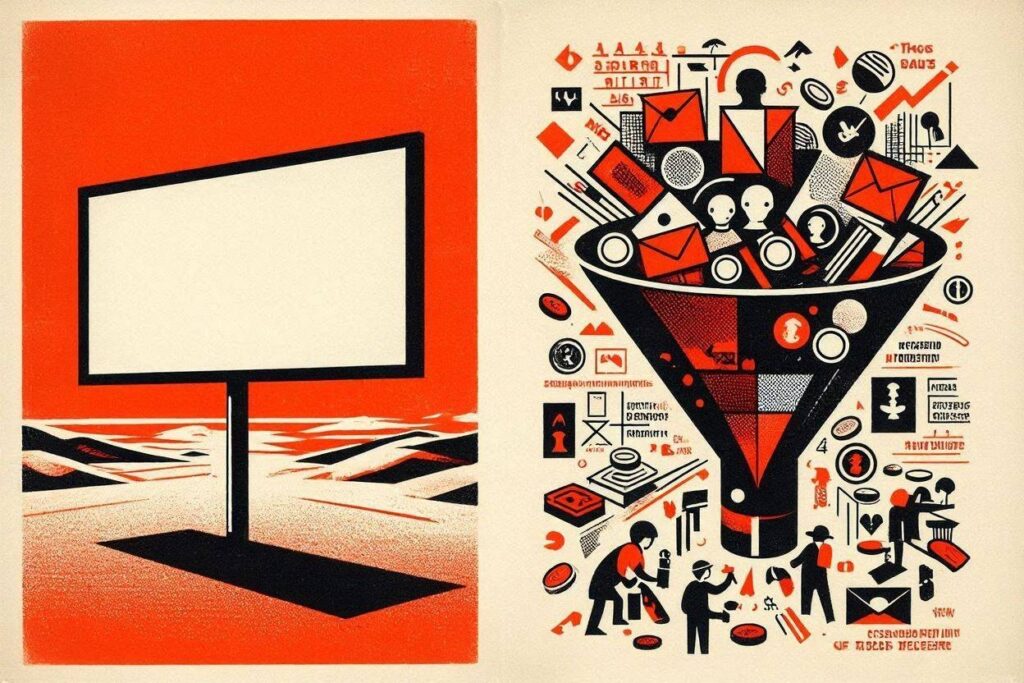
Imagine this: You just dropped $50,000 on a minimalist, sans-serif logo.
The design agency swore it would “revolutionize your market presence.” Meanwhile, your Customer Acquisition Cost (CAC) is climbing faster than a startup founder’s caffeine intake, and your sales funnel is leaking leads like a wet paper bag.
Welcome to the most common—and most expensive—trap in the business world: prioritizing style over strategy during a rebrand.
When growth stalls, the knee-jerk reaction for many C-level executives is to slap a fresh coat of paint on the company. We want new colors, a modern font, and a website with plenty of negative space.
But here is the hard truth: if your core positioning is broken, a new color palette will not save you.
Here is why most rebrands fail to deliver an ROI and how you can build a brand strategy that actually drives revenue.
The “Lip-Gloss on a Pig” Dilemma
A rebrand is not a design project; it is a business strategy project.
If you are losing customers to competitors because your product messaging is confusing, changing your logo to a modern gradient will not fix the confusion. It just makes the confusion look prettier.
When you separate visual identity from business strategy, you end up with a brand that looks good on a billboard but does absolutely nothing to lower your CAC or increase your Customer Lifetime Value (LTV).
According to data from Nielsen, 40% of rebranding campaigns fail to deliver a positive return on investment—meaning they don’t generate the expected financial growth.
Editor’s Note on Sourcing: [Insert Link to Source on Rebrand Failure Rates/ROI here. Make sure the hyperlink is anchored to the phrase “industry data” for clean formatting.]
Why do they fail? Because they started with a mood board instead of a market analysis.
3 Red Flags Your Rebrand is Destined to Tank

If your rebranding discussions sound like any of these, you need to hit the brakes immediately:
- You are obsessing over typography, but ignoring your data. If you do not know exactly why your current customers buy from you (and why lost leads bounce), you have no business choosing fonts.
- Your primary goal is “looking modern.” “Modern” is not a value proposition. If your rebrand does not aim to solve a specific business problem—like fixing a broken funnel, entering a new market, or justifying premium pricing—it is an ego project, not an investment.
- You have not talked to your sales team. Your marketing might look slick, but if the new brand messaging does not help your sales reps close deals faster, the rebrand has failed.
How to Rebrand for ROI, Not Just Ego
If you want a rebrand that actually drives growth, you have to do the heavy lifting before anyone opens Photoshop. Here is your step-by-step playbook for a strategy-first rebrand.
Step 1: Nail Your Positioning (Who are you actually for?) Before you decide what you look like, you have to decide who you are and who you serve. Positioning is about defining the exact space you occupy in your customer’s mind. Your customer should be the hero of the story, not your brand. Are you the budget-friendly, high-efficiency option? Or the premium, white-glove service? Your visual identity must stem directly from this positioning.
Step 2: Fix the Funnel First Look at your current customer journey. Where are people dropping off? The only things people buy are solutions to problems, and if you haven’t identified your customer’s problems or fail to talk about them clearly, you aren’t going to sell anything. If you have a high cart abandonment rate or a massive drop-off after the first sales call, a new logo will not fix it. You need to rebrand your messaging at those specific touchpoints to address customer objections and friction.
Step 3: Align Messaging with Metrics Every element of your new brand should tie back to a metric. Good copy is written in clear, concise, simple words that get your point across.
- Clearer messaging should decrease your CAC because ads convert better.
- Stronger brand loyalty (built through consistent, resonant strategy) should increase your LTV.
- Better market positioning should allow you to raise prices without increasing churn.
The Bottom Line
A successful rebrand is a math equation disguised as art. It requires digging into the ugly, complex parts of your business model, identifying where growth is bottlenecking, and designing a brand that actively solves those problems.
If you just want a pretty logo, hire a freelancer on the internet. If you want a brand that functions as your most efficient salesperson, you need a strategy.
Tired of throwing money at “creative” updates that do not move the needle on your revenue? Stop guessing and start growing. At Subkulture, we build brands rooted in hardcore strategy, clear positioning, and measurable ROI.
[Contact Subkulture today], and let’s build a brand that actually works for your bottom line.